Article Body
Xiaomi 17 Max First Look Revealed With Massive 8000mAh Battery and 200MP Leica Camera
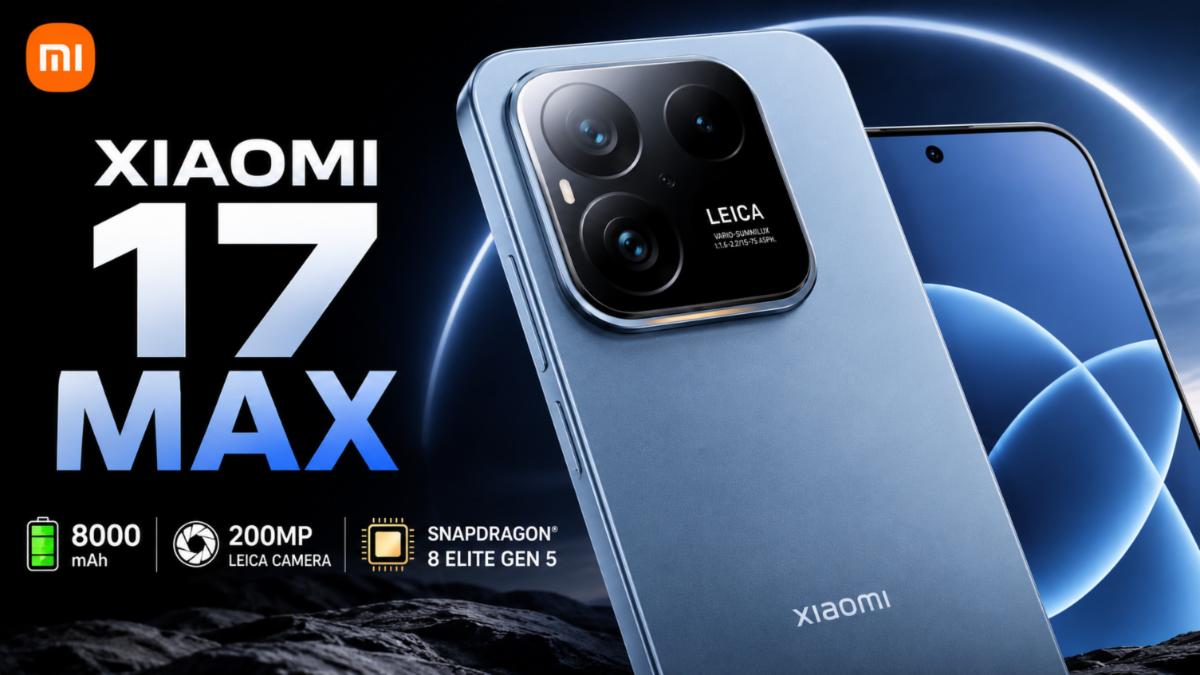
Chinese smartphone giant Xiaomi is preparing to shake up the flagship smartphone market once again with the upcoming Xiaomi 17 Max. The company has officially teased the device on Chinese social media platform Weibo, giving fans their first glimpse at what could become one of the most powerful smartphones of 2026.
According to Xiaomi executive Lu Weibing, the Xiaomi 17 Max is not just a larger version of the standard model but a “fully upgraded” flagship focused on battery life, display quality, and next-generation camera performance.
The teaser has already generated massive buzz in the tech community, especially because of its huge 8000mAh battery, premium Leica-tuned camera system, and Qualcomm’s latest Snapdragon chipset.
Xiaomi 17 Max Display and Design Details Surface Online
The Xiaomi 17 Max is expected to feature a massive 6.9-inch 2K LTPO OLED flat display, marking a return to flat-panel screens instead of curved edges.
Display Highlights:
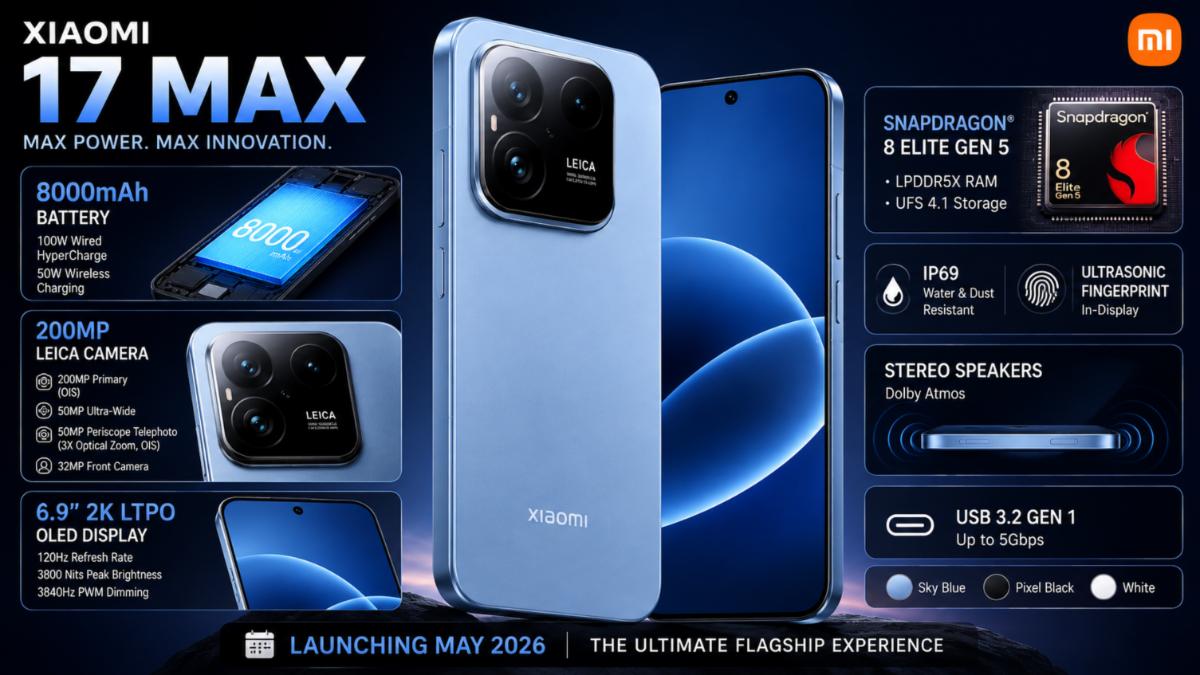
- 6.9-inch 2K LTPO OLED panel
- 120Hz adaptive refresh rate
- 3,800 nits peak brightness
- 3,840Hz PWM dimming for eye protection
The smartphone is also expected to launch in premium color options including:
- Sky Blue
- Pixel Black
- White
Leaked renders suggest the device will feature a metal frame alongside a stylish square-shaped rear camera module.
Xiaomi 17 Max Battery Could Be the Biggest in a Flagship Smartphone
The biggest highlight of the Xiaomi 17 Max is undoubtedly its gigantic 8000mAh battery, which could become the largest battery ever seen in Xiaomi’s flagship lineup.
Reports suggest:
- Standard Xiaomi 17 may feature a 7000mAh battery
- Xiaomi 17 Pro Max could get a 7500mAh unit
- Xiaomi 17 Max may lead the lineup with an 8000mAh battery
To support such a large battery, Xiaomi is reportedly adding:
- 100W wired HyperCharge support
- 50W wireless charging
This combination is expected to attract gamers, heavy users, travelers, and content creators looking for all-day battery performance.
Xiaomi 17 Max camera Specifications Leaked
Photography enthusiasts could see one of Xiaomi’s most advanced camera systems yet. The Xiaomi 17 Max is tipped to feature a 200MP Leica-tuned primary camera using the Samsung ISOCELL HP9 sensor.
Expected Camera Setup:
- 200MP primary sensor with OIS
- 50MP ultra-wide camera
- 50MP periscope telephoto lens with 3x optical zoom and OIS
- 32MP front selfie camera
The Leica partnership is expected to improve image processing, realistic color reproduction, and low-light photography.
Snapdragon 8 Elite Gen 5 Processor to Power Xiaomi 17 Max
Under the hood, the Xiaomi 17 Max is expected to run on Qualcomm’s latest Snapdragon 8 Elite Gen 5 chipset, paired with:
- LPDDR5X RAM
- UFS 4.1 storage
The smartphone is also rumored to include an advanced vapor cooling system to handle gaming and AI-based workloads efficiently.
Xiaomi 17 Max Additional Features
Apart from flagship performance, the device is expected to include several premium features:
Key Features:
- IP69 water and dust resistance
- USB 3.2 Gen 1 support
- Dual stereo speakers with Dolby Atmos
- Ultrasonic in-display fingerprint scanner
Xiaomi 17 Max launch Timeline and Expected Price in India
Xiaomi is expected to officially launch the Xiaomi 17 Max in China by the end of May 2026. The India launch could happen shortly after the Chinese debut.
Expected Price in India:
The smartphone is likely to be priced between ₹75,000 and ₹90,000 depending on storage variants and import pricing.
If Xiaomi manages aggressive pricing, the Xiaomi 17 Max could directly compete against premium flagship smartphones from Samsung and Apple.
Conclusion
With an 8000mAh battery, 200MP Leica camera setup, giant OLED display, and Snapdragon 8 Elite Gen 5 processor, the Xiaomi 17 Max is shaping up to be one of the biggest flagship smartphone launches of 2026.
The official launch is now eagerly awaited, especially by users looking for premium performance, long battery life, and high-end mobile photography in a single device.

Comments