Article Body
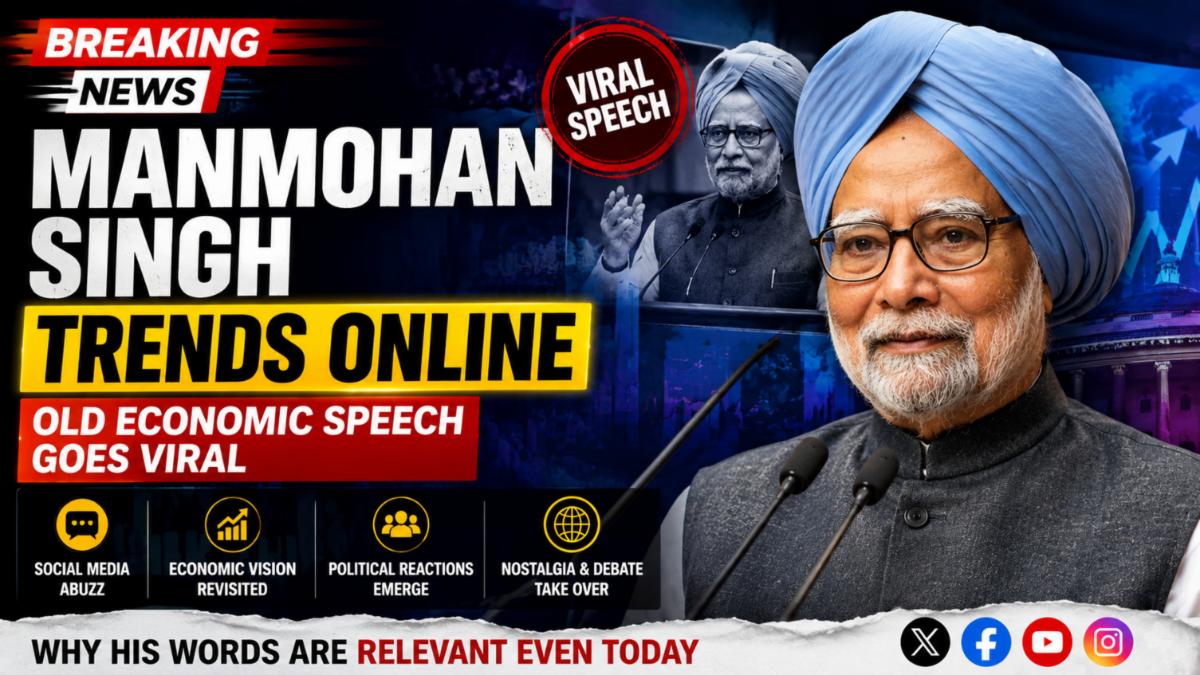
It began, as so many modern reckonings do, with a short video clip.
No breaking news banner. No press conference. No party announcement. Just a calm, bespectacled man behind a podium, speaking in measured sentences about inflation, fiscal responsibility, and the long arc of an economy that must be managed not merely managed for.
A Ghost in the Algorithm
By midweek, hashtags tied to the 92-year-old economist-turned-statesman had climbed to the top of trending lists on X (formerly Twitter), while YouTube's recommendation engine began serving archival Singh footage to users who had never once searched for it.
Instagram Reels stitched together clips from his parliamentary addresses. WhatsApp groups across languages and generations lit up with commentary ranging from reverent to fiercely critical.
The Technocrat Rediscovered
To understand why the clip resonated so forcefully, it helps to understand who Manmohan Singh was before he was a politician.
Singh came to public life not through electoral ambition but through academic rigor. Educated at Cambridge and Oxford, he rose through India's economic bureaucracy and later became the architect of India's landmark 1991 economic reforms.
Political Fault Lines Redrawn
Predictably, the viral moment was rapidly absorbed into India's ongoing partisan battles.
Congress leaders amplified the clip as proof of Singh’s economic foresight, while ruling alliance supporters questioned the timing and selective nostalgia surrounding the resurgence.
Why This Moment Matters Beyond the Trend
A generation of younger Indians has now encountered a leadership style they had no direct experience of. They have compared different ways of speaking about inflation, inequality, and governance.
Whether Manmohan Singh is ultimately remembered as a transformative reformer, a cautious administrator, or something more complex, his ideas have clearly re-entered the national conversation.

Comments