Article Body
Oil Markets on Edge as Trump Signals Possible US-Iran Agreement
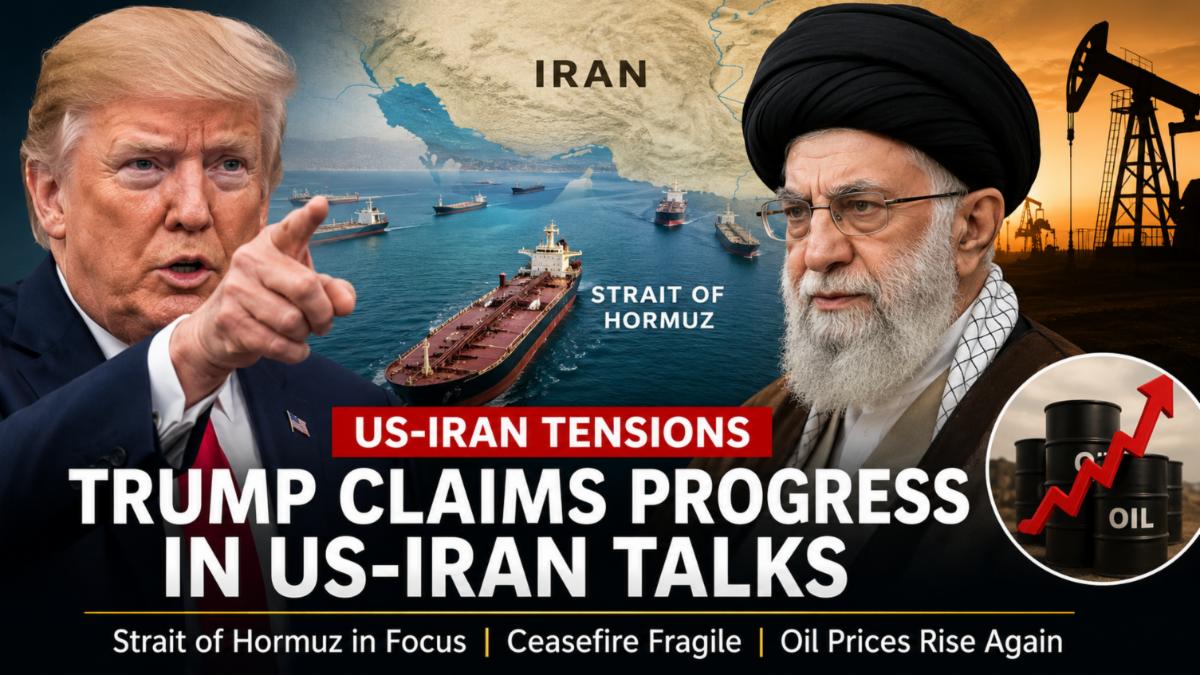
Global energy markets remained highly volatile on Friday after former US President Donald Trump claimed that a tentative agreement between the United States and Iran may be progressing behind closed doors.
The proposed framework reportedly includes:
- reopening the Strait of Hormuz
- extending the current 60-day ceasefire
- allowing controlled Iranian oil exports
The comments immediately triggered fresh reactions across financial and geopolitical markets, especially as tensions in the Middle East continue affecting global oil supply chains.
According to Reuters, crude oil prices climbed again amid fears that the fragile ceasefire could collapse if negotiations fail.
Why the Strait of Hormuz Matters Globally
The Strait of Hormuz is considered one of the world’s most strategically important maritime trade corridors.
Nearly:
- 20% of global oil supply
passes through the narrow waterway connecting the Persian Gulf to international shipping routes.
Any military escalation or shipping disruption in the region usually causes:
- crude oil prices to spike
- shipping insurance costs to rise
- energy market uncertainty to increase
Energy analysts told Bloomberg that even temporary disruptions in Hormuz can quickly affect fuel prices worldwide.
Trump Claims Progress in Negotiations
Donald Trump reportedly suggested that negotiations involving US and Iranian representatives are showing signs of progress.
According to emerging reports, discussions may include:
- reopening commercial oil transit routes
- reducing naval escalation
- extending the ceasefire framework
- partial sanctions flexibility for Iranian oil exports
However, no formal agreement has yet been officially confirmed by both governments.
Political observers believe the talks remain extremely sensitive because of the broader regional conflict environment.
Iran Sends Mixed Signals Over Agreement
Iranian officials have publicly stated that Tehran is open to a:
- “fair and comprehensive agreement”
but conflicting statements from different political and military circles have created uncertainty regarding the country’s actual negotiating position.
According to Al Jazeera, Iranian leadership continues demanding guarantees regarding sanctions relief and security commitments before finalizing any broader understanding with Washington.
At the same time, hardline factions inside Iran reportedly remain skeptical of American intentions.
Reports of US Military Strikes Increase Tensions
The situation became even more complicated after reports claimed that US forces conducted strikes targeting Iranian mine-laying boats near the Strait region.
According to Reuters and regional security reports:
- suspected naval operations near shipping lanes raised fears of direct escalation
Military analysts say maritime security has become the central issue because commercial shipping traffic remains highly vulnerable in the narrow Gulf corridor.
Despite the ceasefire technically remaining active, both sides continue accusing each other of:
- violations
- provocations
- military positioning
This has made the current truce appear increasingly fragile.
Global Oil Prices Rise Again
Crude oil markets reacted sharply to the uncertainty.
Brent crude prices moved higher as traders assessed:
- potential supply disruptions
- regional military risks
- uncertainty around future sanctions
- shipping route instability
According to CNBC, energy traders are now closely monitoring every diplomatic and military development related to Hormuz.
Oil market volatility has already begun impacting:
- airline stocks
- logistics companies
- energy-importing economies
- shipping insurance markets
What This Means for India
For India, the Middle East tensions carry major economic implications because the country imports a large share of its crude oil requirements.
Petrol and Diesel Prices Could Rise
Higher global crude prices may increase pressure on:
- petrol prices
- diesel prices
- transportation costs
Indian consumers could face further fuel inflation if tensions continue escalating.
Rupee May Face Pressure
A rise in crude oil imports generally increases dollar demand, which can weaken the Indian rupee.
Currency analysts told The Economic Times that prolonged oil volatility often creates pressure on emerging-market currencies like the rupee.
Stock Market Volatility Likely
Indian equity markets could also remain volatile, especially sectors linked to:
- aviation
- logistics
- chemicals
- transportation
- fuel-intensive industries
Higher fuel costs can directly affect operational expenses for companies across multiple sectors.
Ceasefire Exists But Stability Remains Uncertain
Although the current ceasefire technically remains in place, geopolitical analysts warn that the situation remains extremely unstable.
The biggest concern for markets right now is uncertainty.
Investors, governments, and energy companies are all trying to assess whether:
- negotiations will succeed
- military escalation will return
- oil exports will stabilize
- shipping lanes will remain open
Any major escalation near the Strait of Hormuz could instantly trigger another global energy shock.
World Markets Watching Middle East Closely
The coming days may prove critical for global markets as diplomatic talks continue alongside military tensions.
For now:
- oil prices remain sensitive
- shipping routes remain vulnerable
- ceasefire conditions remain fragile
And countries like India heavily dependent on imported crude oil are closely watching every development unfolding between Washington and Tehran.

Comments