Article Body
Indian Rupee Slides to Historic Low as Global Market Turbulence Intensifies Pressure on India’s Economy
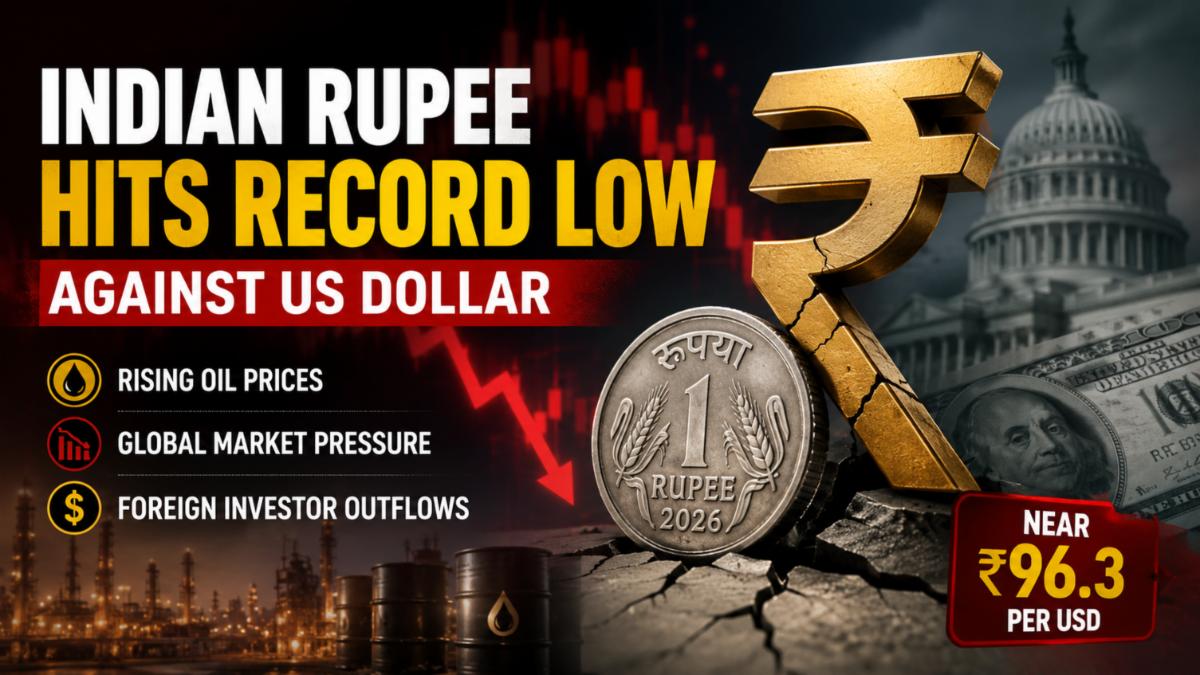
The Indian rupee has plunged to a fresh all-time low against the US dollar, triggering renewed concerns across financial markets, import-heavy industries, and policymaking circles.
During volatile currency trading sessions this week, the rupee reportedly slipped close to the ₹96.3-per-dollar mark, reflecting mounting stress from surging crude Oil Prices, persistent foreign investor outflows, and growing global economic uncertainty.
The sharp depreciation has quickly become one of the most discussed economic developments in India, with analysts warning that continued weakness in the currency could affect inflation, fuel prices, imports, consumer spending, and overseas education costs.
According to Reuters, emerging market currencies across Asia have remained under pressure as investors increasingly move toward safer dollar-denominated assets amid geopolitical instability and global financial volatility.
Crude Oil Prices Create Heavy Pressure on the Rupee
One of the biggest drivers behind the rupee’s fall is the ongoing rally in international crude oil prices.
India imports nearly 85% of its crude oil requirements, making the country highly vulnerable to energy market disruptions and rising global oil prices.
Brent crude recently crossed the $110-per-barrel level amid escalating tensions in the Middle East and fears of supply chain disruptions. Because oil imports are largely settled in US dollars, Indian companies are being forced to purchase more dollars for the same volume of imports directly weakening the rupee further.
Energy market experts told Bloomberg that sustained high oil prices could significantly widen India’s trade deficit if the situation continues over the coming months.
Strong US Dollar Continues Dominating Global Markets
The US dollar has simultaneously strengthened against several global currencies due to rising Treasury yields and expectations that the US Federal Reserve may maintain higher interest rates for longer.
According to CNBC, investors worldwide are increasingly shifting capital toward safer American assets amid uncertainty surrounding global growth and geopolitical risks.
This trend has created heavy pressure on emerging market currencies, including the Indian rupee.
Currency strategists say stronger US economic data and elevated bond yields have further boosted the dollar’s global dominance in recent weeks.
Foreign Investor Selling Adds to Market Volatility
Foreign Institutional Investors (FIIs) have also continued selling Indian equities and debt instruments, increasing demand for dollars in domestic markets.
As investors convert rupee-denominated holdings into dollars before exiting, the local currency faces additional downward pressure.
Stock market analysts told Moneycontrol that global investors remain cautious toward emerging markets due to:
- geopolitical instability
- global inflation risks
- uncertain central bank policies
- slowing international growth forecasts
The continued volatility has affected both currency and equity markets simultaneously.
Common Consumers May Soon Feel the Impact
The weakening rupee is expected to directly impact everyday consumers if depreciation continues over an extended period.
Imported Goods Could Become More Expensive
A weaker rupee increases the cost of imported products because businesses must spend more in rupee terms to buy goods priced in dollars.
Industry experts say products such as:
- smartphones
- laptops
- electronics
- imported machinery
- luxury goods
- medical equipment
could become more expensive in the coming weeks if currency pressure persists.
Companies dependent on imported raw materials may also eventually pass higher costs onto consumers.
Fuel Prices and Inflation Risks Rise Again
The rupee’s weakness has also intensified concerns around fuel inflation.
Since India relies heavily on imported crude oil, a weaker currency makes petroleum imports costlier even if global oil prices remain stable.
Economists warn that elevated fuel costs can gradually increase:
- transportation expenses
- logistics charges
- food prices
- manufacturing costs
- supply chain expenses
According to The Economic Times, inflationary pressure linked to fuel and imports remains one of the biggest economic risks for India’s policymakers right now.
Overseas Education and Foreign Travel Become Costlier
The rupee decline is also affecting Indian students and travelers planning international spending.
Tuition fees, accommodation expenses, and travel costs in dollar-linked economies have risen sharply due to the weaker exchange rate.
Travel industry operators say families preparing for higher education abroad are increasingly concerned about rising financial burdens.
RBI Closely Monitoring Currency Volatility
The Reserve Bank of India is reportedly monitoring market conditions closely as volatility increases.
Financial experts believe the RBI could intervene more aggressively by selling dollars from its forex reserves if currency fluctuations intensify further.
India still maintains strong foreign exchange reserves compared to several emerging economies, providing some confidence to markets despite current instability.
However, economists caution that global macroeconomic factors may continue driving currency movements regardless of short-term interventions.
Markets Brace for More Volatility
Investors are now closely watching:
- crude oil prices
- US Federal Reserve commentary
- global inflation data
- RBI actions
- foreign investment flows
for further direction in the currency market.
According to NDTV Profit, financial markets may remain highly sensitive over the coming weeks as global uncertainty continues affecting investor sentiment worldwide.
For millions of Indians, the rupee’s fall is no longer just a financial headline — it is increasingly becoming a real-world affordability concern tied directly to fuel, travel, imported goods, and everyday living expenses.

Comments