Article Body
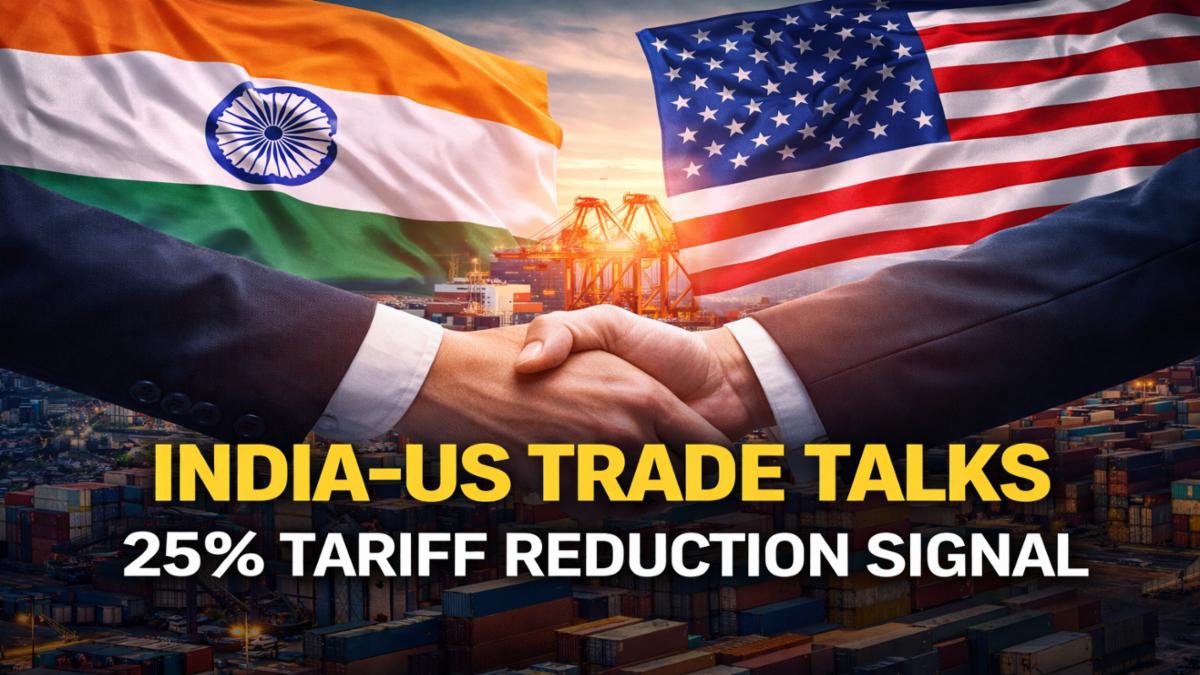
India-US Trade Talks Signal Possible 25% Tariff Reduction, Raising Economic Hopes
Key Developments
Proposed Tariff: 25% penal duty on Indian goods
Current Status: Under review, possible reduction
Background: Linked to India-Russia energy trade
Diplomatic Tone: Cautious optimism in talks
Key Sectors: Engineering, pharma, textiles, IT
Bilateral Trade: Strengthening cooperation
Global Impact: Positive signal for markets
Outlook: Awaiting official confirmation
Trade relations between India and the United States may be heading toward a positive turn, as recent diplomatic signals suggest a possible reduction in the proposed 25% penal tariff on Indian goods. The development has sparked optimism among exporters, industry leaders, and policy analysts on both sides.
Context: The tariff, which was earlier linked to concerns over India's energy trade with Russia, had raised fears of higher costs for Indian exports entering the US market. However, recent discussions indicate that Washington is reassessing its position amid shifting global energy dynamics and improving diplomatic engagement with New Delhi.
Background of the Tariff Issue
The proposed penal tariff emerged during a period of heightened geopolitical tension, particularly following Western sanctions on Russian energy exports.
India's purchase of discounted Russian crude oil drew scrutiny, leading to trade-related pressure from certain Western quarters.
India's Position
Indian officials have emphasized that energy decisions were driven by domestic economic needs and global supply constraints. Simultaneously,
India has diversified its energy imports, a move that appears to have eased some concerns in Washington.
Timeline Overview
⏰ Initial Concerns
Western sanctions on Russian energy exports
🛢️ India's Response
Discounted crude purchases from Russia
⚖️ Trade Pressure
25% tariff proposal emerges
🔄 Current Shift
Diversified imports easing tensions
Diplomatic Signals and Trade Talks
US Flexibility Signals
Recent statements from US officials suggest that there is room for flexibility, especially as bilateral trade continues to expand. India and the United States have strengthened cooperation across technology, defence, and supply chains, making trade stability a shared priority.
Economic Cooperation
Analysts believe that reducing or removing the tariff would align with broader efforts to deepen economic cooperation and counter global slowdown risks. Ongoing diplomatic talks are expected to focus on balancing strategic interests with economic realities.
Potential Impact on Indian Exports and Imports
🇮🇳 Boost for Indian Exports
If the tariff is rolled back, Indian exporters in sectors such as engineering goods, pharmaceuticals, textiles, and information technology services could see improved competitiveness in the US market. Lower duties would help Indian products maintain price advantages and protect market share.
🔧 Engineering Goods
Heavy machinery, auto parts
💊 Pharmaceuticals
Generics, medical devices
👕 Textiles
Apparel, fabrics, garments
💻 IT Services
Software, digital services
🇺🇸 US Import Opportunities
On the import side, smoother trade relations may encourage greater collaboration in high-value sectors, including clean energy technology, semiconductors, and advanced manufacturing.
🌱
Clean Energy Tech
🔌
Semiconductors
🏭
Advanced Manufacturing
Economic and Global Implications
📈 Market Confidence Boost
A tariff reduction would not only benefit bilateral trade but also send a positive signal to global markets. At a time when economies are grappling with inflation, supply chain disruptions, and geopolitical uncertainty, stable India-US trade ties could act as a confidence booster.
🌏 Indo-Pacific Stability
Economists note that stronger economic alignment between New Delhi and Washington may also reinforce strategic partnerships in the Indo-Pacific region, where economic cooperation is increasingly linked to geopolitical stability.
Outlook Ahead
While no formal announcement has yet been made, the tone of recent discussions suggests cautious optimism. Industry stakeholders are now watching closely for official confirmation, which could mark a significant step forward in India-US economic relations.
If realized, the tariff reduction may serve as a reminder that diplomacy and economic pragmatism remain central to navigating an increasingly complex global trade environment.
Current Status
Awaiting Official Confirmation
🌍 International Trade & Economic Analysis
Stay updated with comprehensive trade coverage on IndiaDailyNews.org

Comments